
Termite Fumigation Services in Southern California
Licensed Structural Fumigation for Drywood Termites
Drywood termites can spread through a home’s wooden framing, often beyond the reach of localized treatments. Roadrunner Exterminating provides structural fumigation and termite control services throughout Southern California. We begin with a free termite inspection, explain whether tenting is necessary, and provide a treatment plan with clear preparation instructions and pricing.

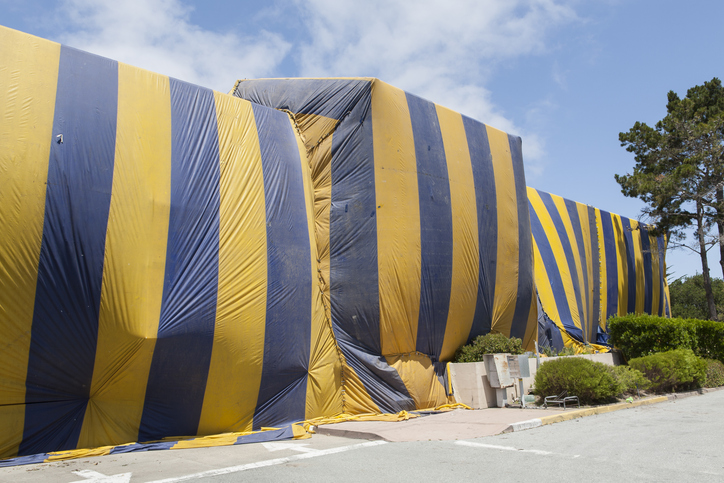
When Does Your Home Need Termite Fumigation?
Structural fumigation, commonly called termite tenting, is designed to treat drywood termite infestations throughout an entire building, including areas hidden behind walls and inside wood.
Fumigation may be recommended when:
- Termite activity is found in multiple areas.
- Infested wood is difficult to access.
- Previous localized treatments have not resolved the problem.
- An inspection indicates widespread drywood termite activity.
Not every infestation requires tenting. Our team evaluates the extent of the problem before recommending treatment.
Drywood Termites vs. Subterranean Termites
Western drywood termites (Incisitermes minor) are a significant concern in Southern California. Unlike subterranean termites, they live inside wood without requiring soil contact.
One common warning sign is the accumulation of small, six-sided fecal pellets beneath infested wood. Discarded wings and damaged wooden surfaces may also indicate activity.
Subterranean termites generally live in soil and reach structures through protected pathways. They require different termite control methods; structural fumigation does not eliminate colonies living underground.
According to the University of California Statewide Integrated Pest Management Program, drywood termite colonies typically contain fewer than 1,000 individuals. Their concealed locations can make infestations difficult to identify without professional inspection.
Source: UC IPM — Drywood Termites
How Does Structural Fumigation Work?
Roadrunner follows a structured process to prepare, treat, and clear your property for reentry.
1. Inspection and Treatment Planning
Our team examines accessible areas for termite activity and damage. We explain the findings, determine whether fumigation is appropriate, and review the proposed schedule and costs.
2. Home Preparation and Tenting
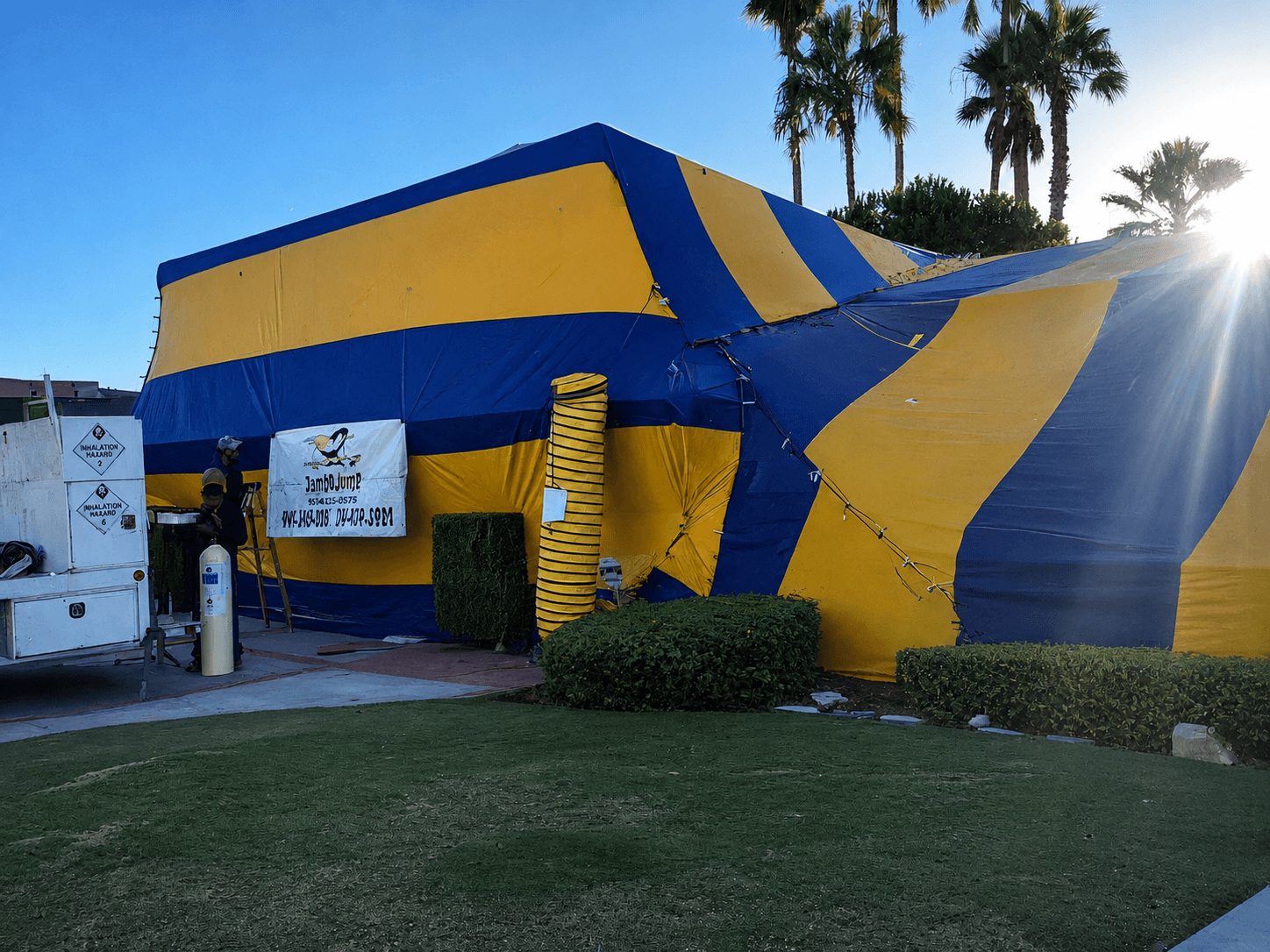
Before treatment, the property must be vacated and properly prepared. The structure is enclosed with specialized tarps to create a controlled treatment environment.
3. Fumigation and Ventilation
The treatment reaches drywood termites in accessible and concealed wooden areas throughout the enclosed structure. Afterward, the building is ventilated according to required procedures.
4. Clearance and Reentry
Residents may return only after the required clearance process confirms the structure is ready for occupancy. Our team communicates the reentry schedule and applicable instructions.

How Long Do You Have to Leave During Fumigation?
Homeowners should generally plan to stay elsewhere for several days. The exact duration depends on the building, treatment requirements, and clearance process.
Before your appointment, we’ll explain when you need to leave, the anticipated reentry date, and how to prepare your property.
Preparing Your Home for Termite Tenting
Proper preparation helps keep the fumigation process on schedule.
Homeowners will need to:
- Arrange temporary accommodations for everyone in the household.
- Remove pets, including fish, and indoor plants.
- Remove or properly bag specified foods, medications, and other required items.
- Follow instructions for landscaping, exterior access, and plants near the structure.
- Arrange access for utility-related preparation when required.
- Follow any additional instructions for sensitive belongings or building materials.
Roadrunner will provide property-specific preparation requirements before treatment begins.
Is Fumigation Always Necessary?
No. Not every drywood termite infestation requires whole-structure fumigation. The appropriate treatment depends on the extent of the infestation, the location of affected wood, and whether the termite activity can be accessed.
Localized treatments: Spot applications, foam, or other targeted methods may be appropriate when termite activity is limited to accessible areas.
Structural fumigation: Whole-structure treatment may be recommended when drywood termites are widespread, hidden in inaccessible areas, or found in multiple locations throughout the property.
Our team evaluates the available options and explains the recommended approach after an inspection.
Fumigation for California Home Sales and Escrow
Termite inspections and fumigation can be important considerations during Southern California real estate transactions.
A Wood Destroying Organism (WDO) inspection report can document visible evidence of termite activity, resulting damage, and conditions that may contribute to infestations.
If fumigation is recommended, buyers, sellers, and escrow representatives should coordinate treatment scheduling, property access, preparation, and required documentation before closing.
Roadrunner Exterminating works with homeowners and real estate professionals to explain inspection findings, treatment recommendations, and anticipated timelines.
Your Trusted Pest Control Experts



Termite Fumigation FAQs
Does fumigation prevent future termite infestations?
Fumigation treats existing drywood termite infestations but does not provide lasting protection against new colonies. Periodic inspections remain important.
Will fumigation damage my belongings?
Certain belongings require special preparation, and tent installation can pose risks to some building materials or landscaping. Follow the preparation instructions and discuss concerns before treatment.
Can I stay home during termite fumigation?
No. All occupants and pets must leave until the property has completed the required clearance process.